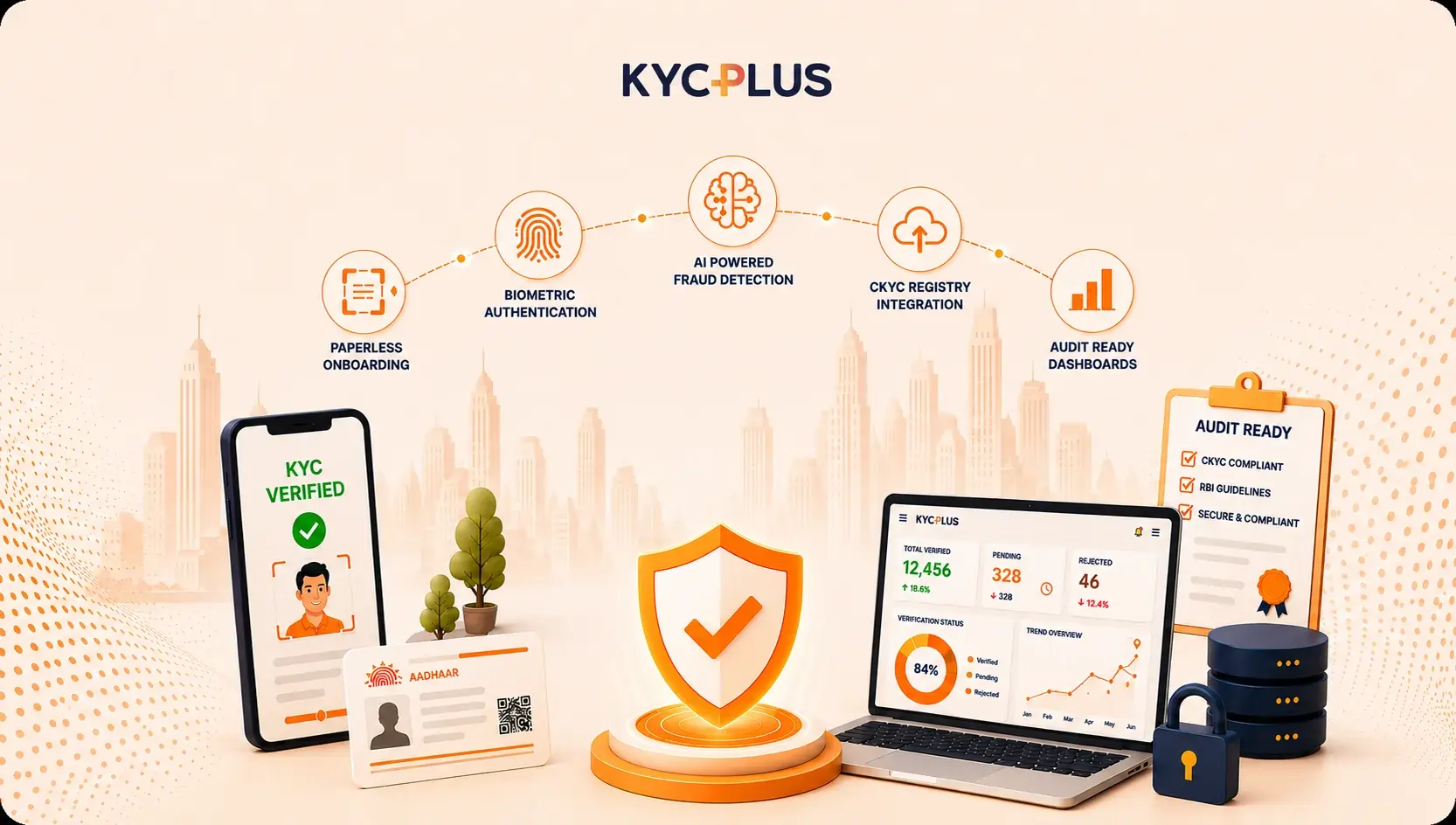
In today’s hyper-connected financial world, onboarding customers has become both an opportunity and a risk. Digital platforms allow banks, fintechs, and cooperative institutions to reach millions instantly, but they also open the door to fraudsters who exploit weak verification systems. Traditional Know Your Customer (KYC) processes, often manual and time-consuming, are no longer sufficient to handle the scale and sophistication of modern fraud. This is where Real-Time KYC Verification emerges as a transformative solution. By instantly validating customer identities during onboarding, institutions can prevent fraudulent actors from entering the system while ensuring genuine customers enjoy a seamless experience. Unlike batch checks or delayed manual reviews, real-time verification leverages advanced technologies such as artificial intelligence, biometrics, and secure API integrations to deliver speed and accuracy.
The importance of this shift cannot be overstated. Fraudulent onboarding not only leads to financial losses but also erodes trust, damages reputations, and exposes institutions to regulatory penalties. Real-Time KYC Verification addresses these challenges head-on, creating a secure, compliant, and customer-friendly onboarding environment.
Onboarding fraud has become one of the most pressing challenges for financial institutions in the digital era. As customer acquisition shifts online, fraudsters exploit loopholes in verification systems to gain unauthorized access. This is where Real-Time KYC Verification plays a crucial role, helping organizations detect and block fraudulent attempts before they cause damage.
Fraud during onboarding typically takes several forms. Identity theft occurs when criminals use stolen personal information to open accounts. Synthetic identities combine real and fake data to create seemingly legitimate profiles that bypass weak checks. Account takeovers happen when fraudsters hijack existing accounts during the onboarding or re-verification process. Additionally, onboarding fraud often masks money laundering activities, where fake accounts are used to move illicit funds.
The consequences are severe: financial losses, regulatory penalties, and reputational harm. Cooperative banks, fintechs, and global institutions alike face rising risks as fraudsters become more sophisticated. Traditional KYC methods, which rely on manual reviews or delayed batch processes, often fail to detect these threats in time.
By implementing Real-Time KYC Verification, institutions can instantly validate identities, flag anomalies, and ensure that only genuine customers are onboarded. This proactive approach transforms onboarding from a vulnerable entry point into a secure gateway.
Traditional KYC processes were designed for a slower, paper-driven world. Customers often had to submit physical documents, wait for manual reviews, and endure long onboarding timelines. While these methods ensured compliance, they created friction and left institutions vulnerable to fraudsters who could exploit delays. In contrast, a modern KYC solution powered by real-time verification represents a technology-driven approach that eliminates these weaknesses. By enabling instant identity validation and automated compliance checks, a real-time KYC solution accelerates customer onboarding, enhances user experience, and significantly reduces the risk of fraud.
With traditional KYC, verification is usually batch-based or dependent on human checks. This means fraudulent accounts can slip through until the review is complete, exposing institutions to risk. Customers also face frustration due to long waiting periods, leading to higher drop-off rates during onboarding.
Real-Time KYC Verification changes the equation entirely. By leveraging AI-powered document recognition, biometric authentication, and instant database checks, identities are validated within seconds. Fraudsters are blocked immediately, while genuine customers enjoy a seamless onboarding experience. This not only reduces fraud but also enhances customer satisfaction and trust.
The strength of Real-Time KYC Verification lies in the advanced technologies that power it. Unlike traditional systems that rely on manual reviews, real-time solutions integrate multiple layers of innovation to ensure speed, accuracy, and fraud prevention.
One of the most critical components is AI-powered document recognition. Artificial intelligence can instantly detect tampered or forged documents by analyzing subtle inconsistencies invisible to the human eye. This ensures fraudulent identities are flagged before onboarding is complete.
Another pillar is biometric authentication, including facial recognition and liveness detection. These tools confirm that the person presenting the identity is genuine and physically present, reducing risks of impersonation or stolen credentials.
API integrations with government and financial databases further strengthen verification. By cross-checking identity verification details against trusted sources in real time, institutions can validate authenticity within seconds.
Finally, machine learning models continuously monitor user behavior and detect anomalies. Suspicious activity patterns—such as multiple accounts from the same device—are flagged instantly, preventing fraud at scale.
Together, these technologies make Real-Time KYC Verification a proactive defense system. By combining AI, biometrics, and secure integrations, institutions can transform onboarding from a vulnerable entry point into a secure, seamless process.
The true power of Real-Time KYC Verification lies in its ability to prevent fraud before it infiltrates the system. Traditional verification methods often detect fraudulent activity only after accounts are created, leaving institutions exposed. Real-time solutions, however, act as a proactive shield during the onboarding stage.
One key mechanism is instant anomaly detection. By analyzing customer behavior patterns in real time, suspicious activities—such as multiple sign-ups from the same device or mismatched identity details—are flagged immediately. This ensures fraudsters are stopped at the gate.
Another critical layer is biometric validation, which confirms that the person presenting credentials is genuine and physically present. Combined with AI-driven document checks, this makes impersonation or stolen identity attempts nearly impossible.
Additionally, Real-Time KYC Verification integrates with global databases to cross-check information instantly. This prevents fraudsters from using fake or outdated documents to bypass onboarding.
Compliance is one of the most critical aspects of customer onboarding, and regulators worldwide are tightening rules to combat financial crime. Institutions must adhere to Anti-Money Laundering (AML) directives, FATF guidelines, and local regulations such as RBI and SEBI frameworks in India. Traditional KYC methods often struggle to keep pace with these evolving requirements, leaving organizations exposed to penalties and reputational risks.
This is where Real-Time KYC Verification becomes indispensable. By instantly validating customer identities against government databases, watchlists, and financial records, institutions can ensure compliance without slowing down onboarding. Real-time systems also generate audit trails automatically, making it easier to demonstrate adherence during regulatory inspections.
Another advantage is adaptability. As new compliance rules emerge, Real-Time KYC Verification platforms can integrate updated checks seamlessly, ensuring institutions remain aligned with global standards. This proactive approach reduces the risk of fines, enhances transparency, and builds trust with regulators.
Ultimately, compliance is not just about avoiding penalties—it’s about safeguarding the financial ecosystem. By adopting Real-Time KYC Verification, institutions achieve both regulatory alignment and fraud prevention, creating a secure and compliant onboarding process that benefits customers and regulators alike.
While the primary goal of Real-Time KYC Verification is to reduce onboarding fraud, its advantages extend far beyond security. Institutions that adopt real-time systems often discover significant business benefits that improve customer experience, operational efficiency, and overall growth.
One of the most notable benefits is faster customer acquisition. Traditional KYC processes can take hours or even days, leading to frustration and drop-offs. With Real-Time KYC Verification, identities are validated within seconds, allowing customers to start using services immediately. This speed not only enhances satisfaction but also boosts conversion rates.
Another advantage is improved trust and brand reputation. Customers feel more secure knowing their financial institution uses advanced verification methods to protect them. This trust translates into stronger relationships and long-term loyalty.
Operational efficiency also improves significantly. Automated real-time checks reduce the need for manual reviews, cutting costs and freeing staff to focus on higher-value tasks. At the same time, fraud-related losses decrease, directly impacting profitability.
In short, Real-Time KYC Verification is not just a compliance or security tool—it’s a growth enabler. By combining fraud prevention with customer convenience, institutions gain a competitive edge in today’s digital-first financial landscape.
The adoption of Real-Time KYC Verification is not just theoretical—it is already transforming financial institutions across the globe. Banks, fintechs, and cooperative societies are reporting measurable reductions in onboarding fraud and significant improvements in customer trust.
For example, several leading fintechs have integrated Real-Time KYC Verification into their mobile apps. By combining biometric authentication with instant document checks, they reduced fraudulent account openings by more than half within the first year. Customers also appreciated the seamless onboarding experience, which boosted app downloads and retention rates.
Cooperative banks in India have also embraced this technology. Traditionally reliant on manual verification, they faced challenges with fraudulent accounts and compliance delays. By implementing Real-Time KYC Verification, these banks now validate customer identities instantly against government databases, ensuring compliance with RBI guidelines while minimizing fraud risks.
Global banks, too, are leveraging real-time systems to meet strict AML and FATF requirements. Automated audit trails and instant anomaly detection have made regulatory reporting smoother and more reliable.
These case studies highlight a clear trend: institutions that adopt Real-Time KYC Verification not only reduce fraud but also gain operational efficiency, regulatory confidence, and stronger customer relationships.
The future of Real-Time KYC Verification is closely tied to the evolution of digital identity and financial technology. As fraudsters become more sophisticated, institutions must continuously upgrade their verification systems to stay ahead. Real-time solutions are expected to integrate even deeper with emerging technologies, making onboarding faster, safer, and more intelligent.
Artificial intelligence will play a larger role, with advanced algorithms capable of detecting subtle fraud patterns across millions of transactions. Biometric innovations such as voice recognition and behavioral biometrics will complement facial and fingerprint checks, adding new layers of security. Blockchain technology is also poised to enhance Real-Time KYC Verification by creating immutable identity records that can be securely shared across institutions without duplication.
Global adoption trends show regulators encouraging digital-first compliance frameworks, meaning real-time verification will soon become the industry standard rather than an option. As governments roll out national digital ID programs, integration with Real-Time KYC Verification will further streamline onboarding while ensuring compliance.
Looking ahead, institutions that embrace these advancements will not only reduce fraud but also position themselves as leaders in customer trust and innovation. The future of onboarding is clear: secure, seamless, and powered by Real-Time KYC Verification.

Customer experience has become the ultimate differentiator in the financial services industry. In a world where customers can switch providers with a single click, institutions must deliver seamless, secure, and fast onboarding experiences. This is where Real-Time KYC Verification plays a transformative role, reshaping how customers perceive and interact with banks, fintechs, and cooperative institutions.
Traditional KYC processes often frustrate customers. Long waiting times, repeated document submissions, and manual reviews create friction. Customers may abandon the process midway, leading to high drop-off rates. Worse, delays in verification can make institutions appear outdated or inefficient. In today’s digital-first environment, customers expect instant access to services, and anything less feels like a barrier.
By validating identities instantly, Real-Time KYC Verification eliminates onboarding delays. Customers can open accounts, access services, or apply for loans within minutes. This speed creates a positive first impression, signaling that the institution values efficiency and customer convenience.
Moreover, real-time systems reduce repetitive steps. Instead of asking customers to upload multiple documents or wait for manual checks, AI-powered verification ensures that one submission is enough. Biometric authentication further simplifies the process—customers can verify themselves with a quick facial scan or fingerprint, making onboarding intuitive and user-friendly.
Customer experience is not just about speed; it’s also about trust. Customers want assurance that their data is secure and that the institution is protecting them from fraud. Real-Time KYC Verification provides this assurance by instantly detecting anomalies, flagging suspicious activity, and preventing fraudulent accounts. When customers know their institution uses advanced verification methods, they feel safer, which strengthens loyalty.
Several fintech platforms have reported significant improvements in customer satisfaction after adopting Real-Time KYC Verification. By integrating biometric checks and instant document validation, they reduced onboarding time from days to minutes. Customers praised the simplicity and security of the process, leading to higher app ratings, increased downloads, and stronger retention.
Cooperative banks, traditionally reliant on manual verification, have also seen customer experience improvements. By adopting real-time systems, they not only reduced fraud but also enhanced customer confidence. Members appreciated the faster onboarding, while institutions benefited from stronger compliance and reduced operational strain.
Ultimately, customer experience is about creating a journey that is fast, secure, and trustworthy. Real-Time KYC Verification delivers all three. It transforms onboarding from a tedious process into a seamless gateway, ensuring customers start their relationship with the institution on a positive note.
In a competitive market, this experience advantage is invaluable. Institutions that prioritize customer convenience while maintaining robust security will stand out, attract more customers, and build long-term loyalty. Real-time verification is not just a fraud prevention tool—it is a customer experience revolution.
Adopting Real-Time KYC Verification is not always straightforward. While the benefits are clear—fraud reduction, compliance, and improved customer experience—institutions often face challenges when integrating these systems into existing technology stacks. Understanding these hurdles and their solutions is critical for a smooth transition.
Many banks and cooperative institutions still operate on legacy infrastructure. These systems were not designed to handle real-time data flows or advanced AI-driven verification. Integrating Real-Time KYC Verification into such environments can be complex, requiring middleware, APIs, or even full system upgrades.
Solution: Institutions can adopt modular verification platforms that integrate seamlessly with legacy systems through APIs. Cloud-based solutions also provide scalability without requiring complete infrastructure overhauls.
Customer data is often scattered across multiple departments—compliance, operations, customer service. This fragmentation makes it difficult to implement unified real-time checks.
Solution: Centralized data management and secure API integrations allow real-time systems to access and validate information across silos. Institutions should prioritize building a single source of truth for customer identity data.
Institutions must ensure that Real-Time KYC Verification complies with data protection laws such as GDPR or India’s Data Protection Bill. Mismanagement of sensitive identity data can lead to penalties and reputational damage.
Solution: Encryption, secure storage, and strict access controls are essential. Partnering with vendors that prioritize compliance ensures that real-time systems meet regulatory standards.
Initial costs of adopting real-time systems can be high, especially for smaller institutions. Staff may also resist change due to unfamiliarity with new technologies.
Solution: A phased rollout strategy helps manage costs. Training programs and change management initiatives ensure staff adapt smoothly. Over time, savings from reduced fraud and operational efficiency outweigh initial investments.
Choosing the right vendor is crucial. Institutions must evaluate providers based on scalability, compliance readiness, and technological innovation.
Solution: Long-term partnerships with trusted vendors ensure continuous updates, integration support, and adaptability to evolving fraud patterns.
The adoption of Real-Time KYC Verification is accelerating worldwide, driven by regulatory pressure, digital transformation, and the rising threat of onboarding fraud. Each region has unique motivations and challenges, but the global trend is clear: real-time verification is becoming the new standard for financial institutions.
Countries like India are leading the way with government-backed digital identity programs such as Aadhaar. Cooperative banks and fintechs are integrating Real-Time KYC Verification with Aadhaar-based eKYC, enabling instant identity validation. Similarly, in Singapore and Australia, regulators encourage digital-first compliance frameworks, making real-time verification a necessity for fintech startups.
The European Union’s strict GDPR and AML directives have pushed institutions toward real-time systems. Banks in Germany, France, and the UK are adopting biometric and AI-powered verification to meet compliance requirements while improving customer experience. The EU’s push for a unified digital identity wallet will further accelerate adoption of Real-Time KYC Verification across member states.
In the US, fintechs and challenger banks are driving adoption. With increasing fraud cases in digital lending and payments, Real-Time KYC Verification has become critical. Regulators such as FinCEN emphasize AML compliance, making real-time systems attractive for both compliance and fraud prevention.
Emerging markets are embracing real-time verification to expand financial inclusion. Mobile-first banks in Kenya and Nigeria use biometric KYC to onboard rural populations securely. In the Middle East, regulators in the UAE and Saudi Arabia are mandating stronger digital identity checks, pushing institutions toward real-time solutions.
Across regions, the convergence of regulatory mandates, customer expectations, and fraud risks is making Real-Time KYC Verification a global priority. Institutions that adopt early gain a competitive edge, while laggards risk compliance failures and customer attrition.
The evolution of Real-Time KYC Verification is far from complete. As fraudsters adopt more sophisticated techniques, institutions must continuously innovate to stay ahead. The future of real-time verification will be shaped by emerging technologies such as artificial intelligence, biometrics, blockchain, and national digital identity programs.
AI will move beyond anomaly detection into predictive analytics. Machine learning models will analyze millions of onboarding attempts to forecast fraud patterns before they occur. This means institutions will not only react to fraud but anticipate it, strengthening their defenses. Real-Time KYC Verification powered by predictive AI will become a proactive guardian of financial ecosystems.
Biometrics will expand beyond facial and fingerprint recognition. Voice authentication, iris scans, and behavioral biometrics (such as typing speed or device usage patterns) will add new layers of security. These innovations will make impersonation nearly impossible, ensuring that only genuine customers pass through onboarding.
Blockchain technology offers immutable, decentralized identity records. By integrating blockchain with Real-Time KYC Verification, institutions can securely share verified identities across networks without duplication. This reduces onboarding friction for customers while maintaining compliance and security.
Governments worldwide are rolling out digital identity initiatives. India’s Aadhaar, the EU’s digital identity wallet, and similar programs in Africa and Southeast Asia will integrate seamlessly with real-time verification. This will allow institutions to validate identities instantly against government-backed databases, ensuring compliance and trust.
As regulators tighten AML and FATF guidelines, Real-Time KYC Verification will become a global standard. Institutions that adopt early will gain a competitive edge, while laggards risk compliance failures and customer attrition.
The future of onboarding is clear: secure, seamless, and intelligent. Institutions that embrace innovations in Real-Time KYC Verification will not only reduce fraud but also redefine customer trust and experience. The next decade will see real-time verification evolve from a compliance tool into a cornerstone of digital identity management worldwide.
The Road Ahead
Adopting Real-Time KYC Verification is not just a technological upgrade—it requires a clear strategy to ensure smooth implementation, regulatory alignment, and measurable business impact. Institutions that approach this transition with a structured roadmap can maximize benefits while minimizing risks.
The first step is to evaluate current onboarding processes. Institutions must identify gaps in fraud detection, compliance, and customer experience. Legacy systems, manual reviews, and fragmented data flows often emerge as key challenges. A readiness assessment helps determine whether a full-scale rollout or phased adoption is more suitable.
Institutions should set clear goals for adopting Real-Time KYC Verification. Objectives may include reducing fraud losses, improving customer onboarding speed, enhancing compliance reporting, or lowering operational costs. Defining measurable KPIs ensures progress can be tracked effectively.
Selecting a vendor is critical. Institutions must evaluate providers based on scalability, compliance readiness, integration capabilities, and innovation. A strong partner ensures continuous updates, support, and adaptability to evolving fraud patterns.
Rather than attempting a full-scale transformation overnight, institutions should adopt a phased rollout strategy. Start with high-risk onboarding channels (such as digital lending or mobile banking) and gradually expand to other areas. This approach minimizes disruption while allowing teams to adapt.
Technology alone is not enough. Staff must be trained to understand and operate real-time systems. Change management programs help overcome resistance and ensure smooth adoption. Employees should view Real-Time KYC Verification as a tool that empowers them, not replaces them.
Fraud patterns evolve constantly. Institutions must monitor performance metrics, analyze anomalies, and update verification models regularly. AI-driven systems thrive on continuous learning, making optimization a critical part of the roadmap.
Finally, institutions should measure the impact of Real-Time KYC Verification. Metrics such as reduced fraud losses, faster onboarding times, improved customer satisfaction, and compliance efficiency provide tangible evidence of success.
The strategic roadmap does not end with implementation. Institutions must view Real-Time KYC Verification as a long-term investment in trust, security, and growth. By aligning technology, compliance, and customer experience, they can build a resilient foundation for the digital future.
The journey through Real-Time KYC Verification reveals a powerful truth: fraud prevention is no longer reactive—it must be proactive, intelligent, and seamless. Institutions that rely on outdated manual checks expose themselves to risks that can cripple both finances and reputation. By contrast, real-time systems validate identities instantly, detect anomalies before they escalate, and ensure compliance with global regulations.
Beyond fraud prevention, the benefits ripple across customer experience, operational efficiency, and long-term growth. Customers enjoy faster onboarding, regulators gain confidence, and institutions save costs while building trust. As AI, biometrics, and blockchain continue to evolve, Real-Time KYC Verification will become the cornerstone of digital identity management worldwide.
The message is clear: institutions that embrace real-time verification today will lead tomorrow’s financial ecosystem. Those that hesitate risk falling behind in a world where trust, speed, and security define success.
Ans: It is an advanced identity validation process that instantly verifies customer details using AI, biometrics, and secure database integrations, ensuring fraud prevention during onboarding.
Ans: Traditional KYC relies on manual reviews and batch processing, which are slow and error-prone. Real-time systems validate identities instantly, reducing fraud and improving customer experience.
Ans: It prevents fraudulent accounts, ensures compliance with AML and FATF guidelines, reduces operational costs, and enhances customer trust.
Ans: AI-driven document recognition, biometric authentication, API integrations with government databases, and machine learning models for anomaly detection.
Ans: Yes. It aligns with AML directives, FATF guidelines, GDPR, and local regulatory frameworks such as RBI in India.
Ans: By eliminating onboarding delays, reducing repetitive document submissions, and offering biometric authentication, customers enjoy faster and smoother access to services.
Ans: Institutions save on manual review costs, reduce fraud-related losses, and streamline operations, leading to long-term ROI.
Ans: Yes, through modular platforms and API-based integrations. Cloud solutions also provide scalability without requiring full infrastructure overhauls.
Ans: Banks, fintechs, cooperative societies, digital lending platforms, insurance companies, and even telecom providers benefit from secure onboarding.
Ans: The future lies in predictive AI, advanced biometrics, blockchain-based identity ecosystems, and integration with national digital ID programs, making real-time verification the global standard.
